
Why Fitness Should Be Treated as a Lifestyle Instead of a Challenge: Ending the "Start-Stop" Cycle
The Problem with "Day 31"
We’ve all seen them: the 30-day "Abs Challenge," the 75-day "Hard" program, or the 6-week "Transformation." These challenges are designed to get you excited. They provide a clear start date, a specific set of rules, and a "finish line" where you get your reward.
And in the short term, they work. People lose weight, they get stronger, and they feel a sense of accomplishment.
But then comes Day 31.
Without the structure of the challenge and the excitement of the "deadline," most people slowly slide back into their old habits. Within a few months, the results are gone, and they are looking for the next challenge to "get them back on track."
This "Start-Stop" cycle is exhausting and ineffective. To see true, lasting results, you must stop treating fitness as a temporary challenge and start treating it as a permanent Lifestyle. In this article, we’ll explore why challenges are a trap and how to build a lifestyle that supports your health forever.
---
1. The "Short-Term" Mentality: Why We Love Challenges
Challenges exploit a fundamental part of human psychology: our love for "newness" and "urgency."
- Urgency: A deadline (e.g., a wedding or a beach vacation) forces us to act.
- Structure: Challenges remove the need for decision-making. We are told exactly what to do.
But this structure is "external." It’s a cage that keeps you in line, but it doesn't change who you are. As soon as the cage door opens at the end of the challenge, you return to your "wild" state.
Lifestyle change is "internal." It’s about building the skills to manage your own behavior without a coach or a set of rules. It’s not about "finishing" a project; it’s about "evolving" your baseline.
---
2. The Identity Shift: From "Doing" Fitness to "Being" Fit
The biggest difference between a "challenge participant" and a "lifestyle athlete" is their Identity.
- A participant says: "I’m doing a 30-day diet." (The diet is something they are "trying" to do).
- A lifestyle athlete says: "I’m a person who eats healthily." (The diet is just who they are).
When fitness is a lifestyle, you don't need willpower to go to the gym. You go because it’s part of your daily rhythm, like brushing your teeth or drinking coffee. You don't have to "decide" to be healthy every morning; you’ve already made that decision once, and now you’re just living it out.
Building a lifestyle is about "casting votes" for your identity, as discussed in our article on "The Importance of Consistency Over Perfection." Every small choice reinforces the person you are becoming.
---
3. The Sustainability Test: Can You Do This at 80?
If you want to know if your current routine is a "lifestyle" or a "challenge," ask yourself this question: "Can I see myself doing this when I am 80 years old?"
- Can you do 2 hours of high-intensity cardio every day at 80? (Probably not).
- Can you maintain a "zero-carb" diet at 80? (Probably not).
- Can you walk for 30 minutes, do some basic strength movements, and eat mostly whole foods at 80? (Yes!).
If your current routine is too extreme for your 80-year-old self, it is a challenge, not a lifestyle. A lifestyle is built on "Minimum Effective Doses"—the actions that provide 80% of the results with 20% of the stress. Use our [exercise guide](https://gymguide.co/exercises) to find movements that build longevity, not just temporary exhaustion.
---
4. Navigating Life’s "Seasons": Why Your Routine Must Be Modular
Life is not a flat line. You will have "seasons" of high stress, travel, illness, or family changes.
- Challenge Mentality: If you can't do the full program during a busy season, you quit.
- Lifestyle Mentality: You "scale" your routine. You move from a "Growth Phase" to a "Maintenance Phase."
A fitness lifestyle is Modular. On your best weeks, you might train 5 days a week and hit every macro goal. On your worst weeks, you might just walk for 15 minutes a day and ensure you get enough protein.
Both weeks are a success because you stayed in the game. You didn't stop being a "fit person" just because you were busy. You just adjusted the volume.
---
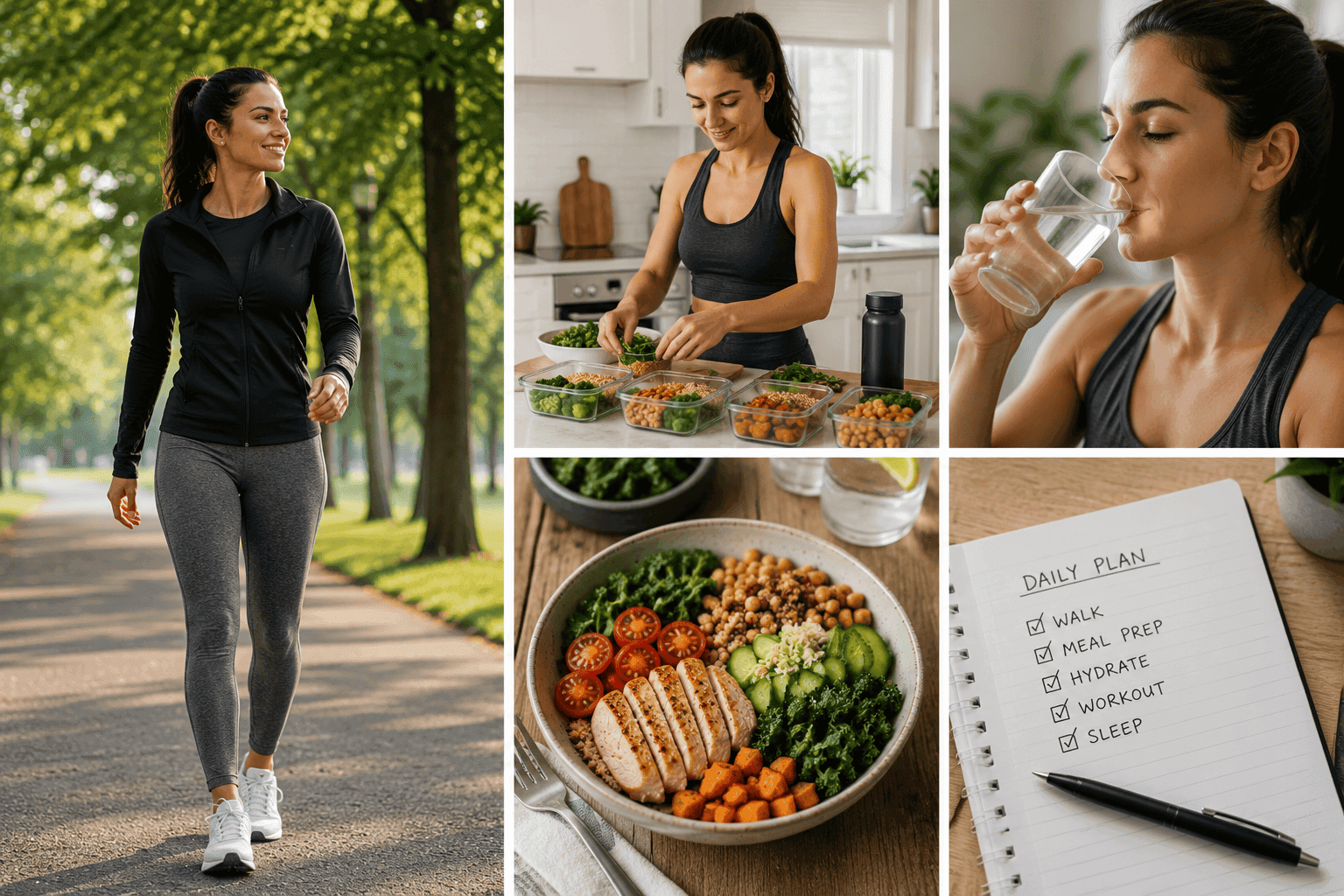
5. The Power of Low-Intensity Baseline Habits
A fitness lifestyle is anchored by habits that require zero willpower. These are your "Baselines."
- Walking: Hitting a minimum step count every day, regardless of the gym.
- Hydration: Drinking 2-3 liters of water.
- Protein: Ensuring every meal has a protein source (monitored by our [macro calculator](https://gymguide.co/macro-calculator)).
- Sleep: Having a consistent bedtime.
When these baselines are automatic, you are "fit by default." The gym sessions are just the "extra" that accelerates your progress. Challenges often ignore these baselines in favor of "extreme" workouts, which is why they fail as soon as the intensity stops.
---
6. Redefining Success: Beyond the Scale and the Mirror
In a challenge, success is defined by a "Before and After" photo or a specific weight loss number.
In a lifestyle, success is defined by Capability and Energy.
- Success is being able to hike with your friends without getting winded.
- Success is having the energy to play with your kids after a long day at work.
- Success is your blood pressure and heart rate improving (checked by our [BMI calculator](https://gymguide.co/bmi-calculator)).
When you shift your focus from "how you look" to "how you function," the pressure disappears. You start to value the process of moving and nourishing your body for its own sake, rather than as a means to an end.
---
7. How to Build a Fitness Lifestyle That Lasts
To transition from "challenges" to a "lifestyle," follow these steps:
Creating an Environment for Success
Make the healthy choice the easiest choice.
- Keep healthy snacks at eye level.
- Have your gym bag packed.
- Delete the delivery apps that tempt you.
Environment always beats willpower in the long run.
The Role of Community and Social Support
Surround yourself with people who already live the lifestyle you want. Join a local club, find a training partner, or use our [exercise guide](https://gymguide.co/exercises) to join a community of people pursuing similar goals. We are the average of the five people we spend the most time with.
Mastering the Art of the Pivot
Instead of feeling guilty when things go wrong, learn to "Pivot." If the gym is closed, do bodyweight work at home. If you overate at lunch, just eat a smaller dinner. The "Pivot" is the ultimate skill of the lifestyle athlete. Use our [calorie calculator](https://gymguide.co/calorie-calculator) to stay objective about your energy balance.
---
Conclusion: The Infinite Game
Fitness is not a game you "win" and then stop playing. It is an "Infinite Game"—a game where the only goal is to keep playing.
Challenges have their place for a temporary spark of motivation. But they should never be the foundation of your health. Stop looking for the next "30-day" fix. Start looking for the habits you can maintain for the next 30 years.
The reward for a healthy lifestyle isn't a "Finish Line." The reward is the life you get to live while you’re in it.
---
Frequently Asked Questions (FAQ)
1. Are "Challenges" ever good?
Yes, they are great for breaking a plateau or trying a new style of training. But they only work if you have a "Lifestyle" to return to afterward. A challenge should be a "sprint" within a marathon, not the whole race.
2. How do I start a "Lifestyle" if I'm currently sedentary?
Start with one habit. Just walk for 10 minutes a day for a month. Once that’s automatic, add another habit (like eating protein at every meal). Slow growth is the most stable growth.
3. What if my friends don't live a "Fitness Lifestyle"?
You don't have to change your friends, but you do need to set boundaries. Be the person who suggests a walk instead of a bar, or the person who brings a healthy dish to the party. Often, your friends will be inspired to join you.
4. How long does it take to feel like a "Lifestyle"?
Typically, it takes about 6 months of consistency for a behavior to become "part of who you are." The first 2 months are the hardest; after that, the momentum takes over.
5. Why do I feel like I'm "failing" if I'm not doing a challenge?
Because you’ve been conditioned to believe that "fitness" must be difficult and extreme. In reality, the most "successful" people in fitness are the ones who make it look easy because they’ve built it into their lifestyle. Use our [BMI calculator](https://gymguide.co/bmi-calculator) to see the quiet, steady progress of your lifestyle.
---
Related Posts:- [Why Most People Quit Fitness After 30 Days](/blog/why-most-people-quit-fitness-after-30-days)
- [The Importance of Consistency Over Perfection in Fitness](/blog/the-importance-of-consistency-over-perfection-in-fitness)
- [Why Sustainable Fitness Always Beats Extreme Transformations](/blog/why-sustainable-fitness-always-beats-extreme-transformations)
🚀 Ready to start your transformation?
Download GymGuide Free →