
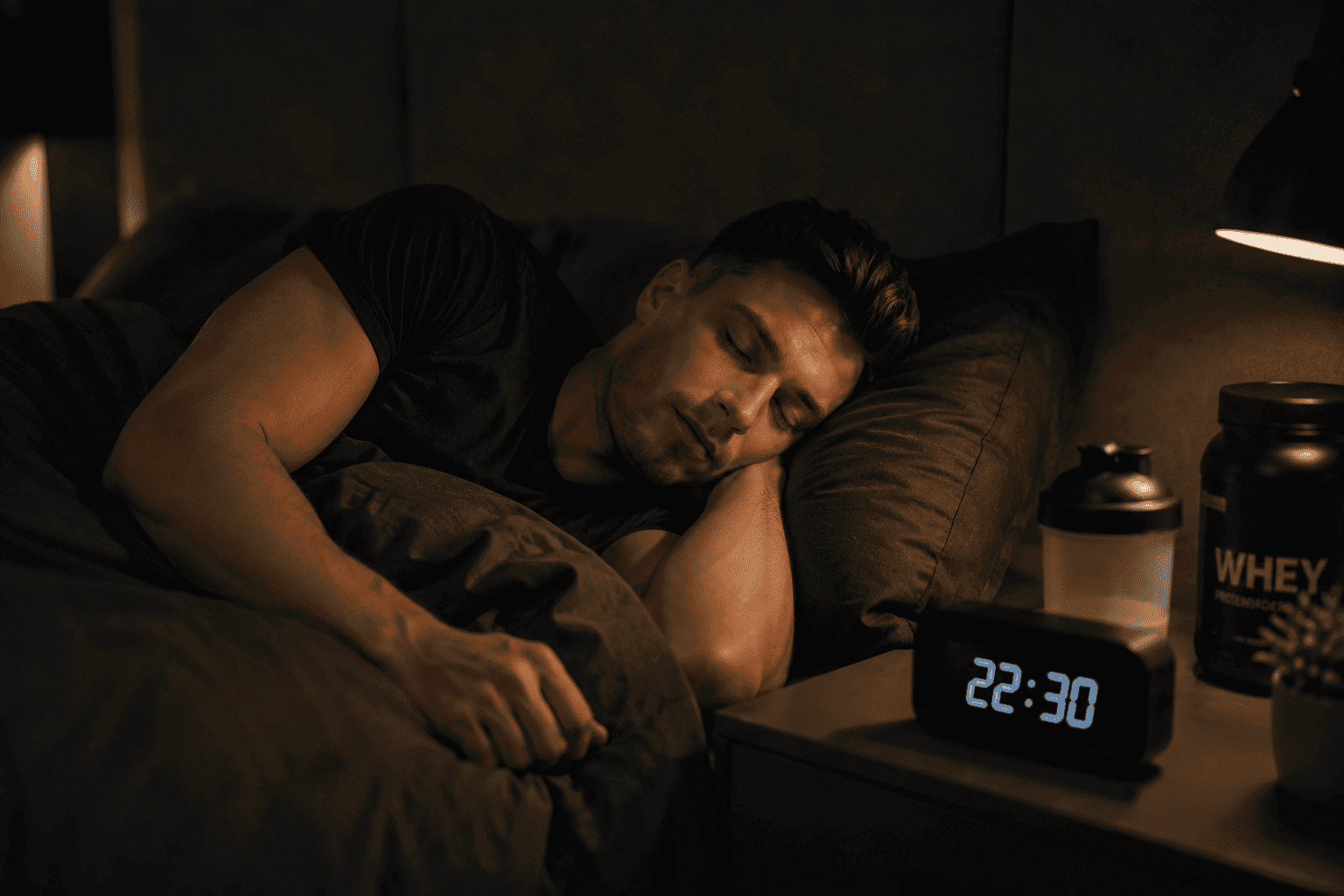
Why Sleep Is More Important Than Most Supplements: The Ultimate Performance Enhancer
The Supplement Trap: Why We’re Looking for Health in the Wrong Places
The global fitness supplement industry is worth billions of dollars. Millions of people wake up every morning and take a cocktail of pre-workouts, fat burners, BCAAs, and testosterone boosters, hoping to gain an edge in their fitness journey. We are obsessed with the "1%"—the tiny margins that might make a marginal difference.
Yet, many of these same people are chronically sleep-deprived. They stay up late scrolling through social media, wake up to an abrasive alarm, and rely on caffeine to survive the day.
If you are looking for the most powerful performance-enhancing "drug" in the world, you don't need a credit card and a trip to the supplement store. You just need your bed. Sleep is not "downtime"; it is an active, vital biological process that governs almost every aspect of your physical and mental health. In this article, we’ll explore why sleep is more important than almost any supplement you can buy and how to optimize it for peak performance.
---
1. Sleep: The Biological "Maintenance Mode"
Imagine your body is a high-performance race car. During the day, you are driving it at high speeds—you’re working, training, and dealing with stress. Your "engine" gets hot, your tires wear down, and you use up your fuel.
Sleep is when that car goes into the pit stop. It is the only time your body can perform essential maintenance.
- The Glymphatic System: This is your brain's "waste management" system. During deep sleep, the space between your brain cells increases, allowing cerebrospinal fluid to flush out toxic proteins like beta-amyloid, which are linked to Alzheimer's.
- Cellular Repair: Your body increases the production of proteins and repairs the micro-tears in your muscles caused by your workouts.
Without sleep, the "car" never gets fixed. You just keep driving it until it breaks down. No amount of pre-workout can fix a broken engine.
---
2. Hormone Optimization: Testosterone, Growth Hormone, and Cortisol
Your hormones are the "chemical messengers" that tell your body whether to build muscle, burn fat, or store energy. Sleep is the primary regulator of these hormones.
Growth Hormone (GH)
The vast majority of your daily growth hormone is released in large pulses during deep, slow-wave sleep. GH is essential for tissue repair, muscle growth, and bone density. If you cut your sleep short, you are literally cutting off your body's ability to grow and recover.
Testosterone
Testosterone levels in men are heavily dependent on sleep quality. Studies have shown that just one week of sleeping 5 hours a night can reduce testosterone levels by 10-15%—an amount that effectively ages a man by 10 years. No "natural testosterone booster" on the market can compete with the power of a solid 8 hours of sleep.
Cortisol
When you are sleep-deprived, your body perceives it as a stressor. This leads to chronically elevated cortisol levels. High cortisol inhibits muscle growth and promotes the storage of visceral fat (belly fat). Sleep is the most effective way to keep cortisol in check.
---
3. Muscle Protein Synthesis and Recovery: When the Real Growth Happens
There is a common saying in the fitness world: "You don't grow in the gym; you grow in your sleep."
The gym is where you provide the stimulus. You break down your muscle fibers and create stress. However, the actual adaptation—the process of those muscles becoming bigger and stronger—happens during sleep. This is when muscle protein synthesis (MPS) is at its peak.
If you hit a PR in the gym but only sleep 4 hours that night, you have wasted a significant portion of your effort. You have given your body the command to change but haven't given it the time or resources to execute that command. Sleep is the ultimate "recovery supplement."
---
4. Cognitive Function and Reaction Time: The Brain's Nightly Cleanup
Performance isn't just physical; it's mental. Whether you're an athlete on the field or a professional in the boardroom, your reaction time and decision-making are critical.
Research has shown that being awake for 19 hours straight results in cognitive impairment equivalent to being legally drunk. Sleep deprivation slows your processing speed, impairs your memory, and makes you more prone to errors.
In the gym, this translates to poor form, a higher risk of injury, and the inability to "push" yourself mentally during a hard set. A well-rested brain can recruit more muscle fibers and maintain better focus, leading to a much more effective workout.
---
5. The Link Between Sleep Deprivation and Fat Gain
If your goal is weight loss, sleep is just as important as your diet. Sleep deprivation is a metabolic disaster.
- Ghrelin and Leptin: As mentioned in previous articles, sleep loss increases ghrelin (the hunger hormone) and decreases leptin (the satiety hormone). This makes you crave high-calorie, sugar-dense foods.
- Insulin Sensitivity: Even a single night of poor sleep can make a healthy person "prediabetic" by reducing their insulin sensitivity. This means your body is more likely to store carbohydrates as fat rather than using them for energy.
You cannot "supplement" your way out of a bad metabolism caused by poor sleep. Use our [calorie calculator](https://gymguide.co/calorie-calculator) to manage your intake, but remember that those numbers only work if your hormones are balanced by rest.
---
6. Why "I'll Sleep When I'm Dead" is a Dangerous Philosophy
The modern world prizes "hustle culture." We wear our lack of sleep like a badge of honor. But this philosophy is fundamentally flawed.
Short-changing your sleep doesn't make you more productive; it makes you a slower, sicker, and less effective version of yourself. Over time, chronic sleep deprivation leads to heart disease, stroke, obesity, and a weakened immune system.
If you want to be successful long-term, you have to treat sleep as a non-negotiable part of your "job." It is the foundation upon which everything else—training, nutrition, work—is built.
---
7. How to Hack Your Sleep for Peak Performance
To get the most out of your rest, you need to prioritize both quantity (7-9 hours) and quality.
The "Darkness Protocol"
Your brain needs darkness to produce melatonin.
- Turn off overhead lights 1-2 hours before bed.
- Use "night mode" on your devices or wear blue-light blocking glasses.
- Ensure your bedroom is pitch black using blackout curtains or an eye mask.
Temperature and Humidity Optimization
Your body temperature needs to drop by about 2-3 degrees Fahrenheit to initiate sleep.
- Keep your bedroom cool (around 65°F or 18°C).
- Take a warm bath or shower before bed; the cooling process afterward triggers sleepiness.
The Role of Magnesium and Pre-Sleep Nutrition
While most supplements are over-hyped, Magnesium is one that actually supports sleep by regulating the nervous system.
- Avoid large meals and caffeine 3-4 hours before bed.
- Ensure you are hitting your protein targets during the day using our [macro calculator](https://gymguide.co/macro-calculator) so your body has the amino acids it needs for repair while you sleep.
---
Conclusion: Reclaiming Your Power
It’s time to stop looking for progress in a pill bottle and start looking for it in your bedroom. Supplements have their place, but they are the "frosting" on the cake. Sleep is the cake itself.
If you want to be stronger, leaner, smarter, and more resilient, the most effective thing you can do today is go to bed on time. Treat your sleep with the same intensity and discipline that you treat your workouts. When you respect your body's need for rest, your body will reward you with performance you never thought possible.
Sleep is not for the weak; it is for the elite. Rest well, and wake up better.
---
Frequently Asked Questions (FAQ)
1. Can I "catch up" on sleep on the weekends?
Not really. While sleeping in on the weekend can help reduce immediate fatigue, it doesn't fully reverse the metabolic and hormonal damage of a week of sleep deprivation. Consistency is key. Try to keep your wake-up time within an hour of the same time every day.
2. Is it bad to work out late at night?
It depends on the individual. For some, the spike in body temperature and adrenaline can interfere with sleep. If you have to work out late, try to have a cool shower and use a relaxation technique afterward. Use our [exercise guide](https://gymguide.co/exercises) to find lower-intensity options for evening sessions if needed.
3. Are sleep tracking apps/watches accurate?
They are great for tracking "trends" (how long you were in bed, when you woke up), but they are not 100% accurate at distinguishing between different sleep stages (REM vs. Deep). Use them as a general guide rather than absolute truth.
4. Why do I wake up in the middle of the night?
This can be due to many factors: stress, alcohol consumption, a room that is too warm, or blood sugar fluctuations. Avoid alcohol before bed and try to manage your stress during the day. Check your [BMI calculator](https://gymguide.co/bmi-calculator) data to see if your overall health is improving, which often leads to better sleep stability.
5. Should I take melatonin supplements?
Melatonin can be useful for jet lag or short-term sleep shifts, but it’s best not to rely on it long-term. Your body produces it naturally when exposed to darkness. Focus on "sleep hygiene" first before reaching for a supplement.
---
Related Posts:- [Why Recovery and Rest Are Essential for Progress](/blog/why-recovery-and-rest-are-essential-for-progress)
- [How Poor Sleep Affects Hunger, Weight, and Recovery](/blog/how-poor-sleep-affects-hunger-weight-and-recovery)
- [The Hidden Health Effects of Chronic Stress](/blog/the-hidden-health-effects-of-chronic-stress)
🚀 Ready to start your transformation?
Download GymGuide Free →